Your Members Are Already Looking for This Training.
We Have the Evidence to Prove It.
Health professionals have taken our GLP-1 training
Board certified health and wellness coaches, dietitians and nutritionists, nurses and nurse practitioners, therapists, counsellors, physicians, and health coaches — actively seeking training to fill the psychological gap in GLP-1 care.

What Your Members Are Telling Us
We asked every one of those 697 practitioners the same question: what is your single biggest challenge when working with weight management and GLP-1 medications? Their answers were more revealing than we expected.
"Body image dissatisfaction amplified, eating disorder 'noise' increases while 'food noise' decreases, and clients are in conflict around fuelling their body."
Health coach working with GLP-1 patients
GLP-1 prescriptions were increasingly landing with clients who had a formal diagnosis of binge eating disorder, with no psychological support built into the pathway.
Psychiatric nurse
The fear that runs through clinical encounters when the medication eventually stops — the return of cravings, food noise, and emotional eating patterns that were never actually addressed.
Recurring theme across practitioners
A consistent thread of professional uncertainty ran through the answers: "How to stay in scope and provide value while supporting clients on GLP-1 medications." "Being sure to stay within scope." "Clarifying my scope on the medications with clients." These are not practitioners who lack commitment. They are practitioners who lack a framework — a clear, evidence-based structure for what they can do, how they can do it safely, and where they need to refer on.
These are not nutrition questions. They are psychological ones, and most practitioners working in GLP-1 care right now have no training to answer them.
What Association Members Say
The numbers below come from two separate engagements with ADCES — the Association of Diabetes Care & Education Specialists. A conference session in New Orleans in 2024, and a members webinar in 2025. The pattern across both is the same: strong uptake, strong outcomes, and members asking for more.
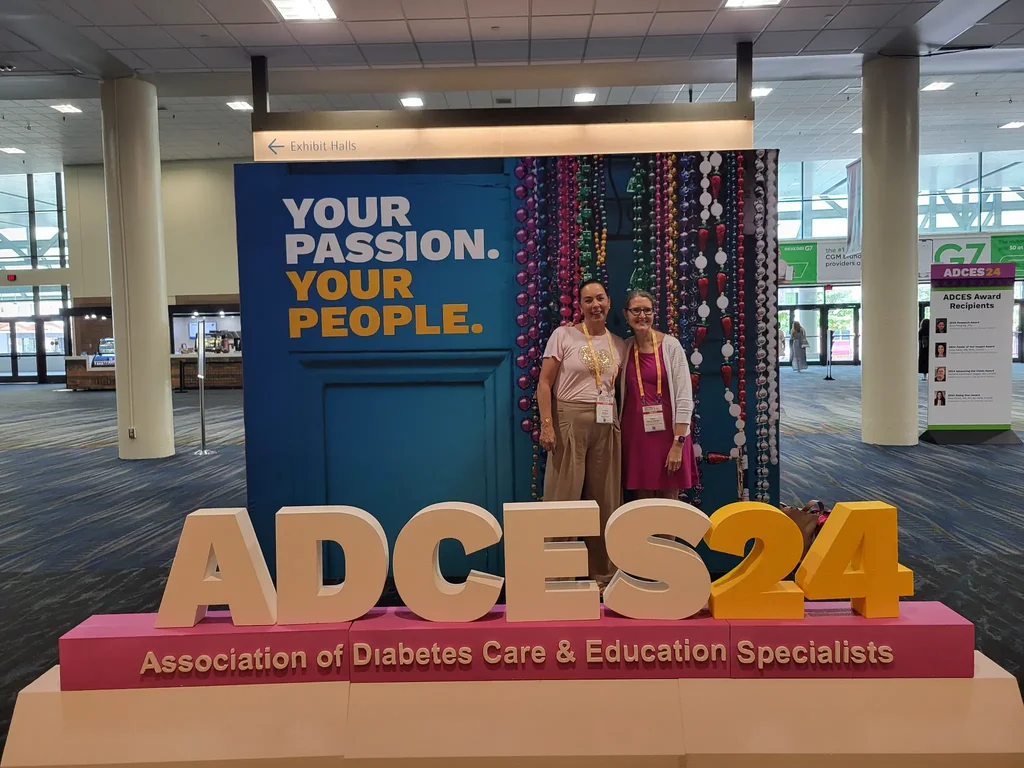
Emma at ADCES24, New Orleans — Association of Diabetes Care & Education Specialists Annual Conference
What We Offer Association Partners
Eating Freely's GLP-1 training is already NBHWC-approved and in active use across the profession.
Promoted CE Listing with Revenue Share
Your association promotes our fully self-paced, rolling enrolment GLP-1 training to your membership. Members enrol directly, complete at their own pace, and earn 12 CE credits. You receive a revenue share on every enrolment from your community.
Co-Branded or Endorsed Offering
We work with your team to present the training under a co-branded framework — your association's endorsement, our clinical content and delivery. Particularly well-suited to associations wanting to position themselves as leaders in GLP-1 psychological support.
White-Label Licensing
For associations or large membership organisations wanting to offer the training as their own CPD resource — full licensing of curriculum, delivery framework, and client-facing materials, with ongoing clinical support from Eating Freely.
Years of clinical practice
Reduction in emotional eating
Published in Journal of Human Nutrition
Why Eating Freely
The Eating Freely programme was developed over 16 years of clinical practice, independently evaluated by Leeds Beckett University, and published in the Journal of Human Nutrition and Dietetics in 2025 — the first study of its kind to calculate the impact of specific behaviour change techniques on emotional eating outcomes.
Our validated outcome data shows a 27.7% reduction in emotional eating scores across participants. This is not a product built for the GLP-1 moment. It is a clinical framework validated over 16 years that is now exactly what the GLP-1 moment requires.
About the Founder
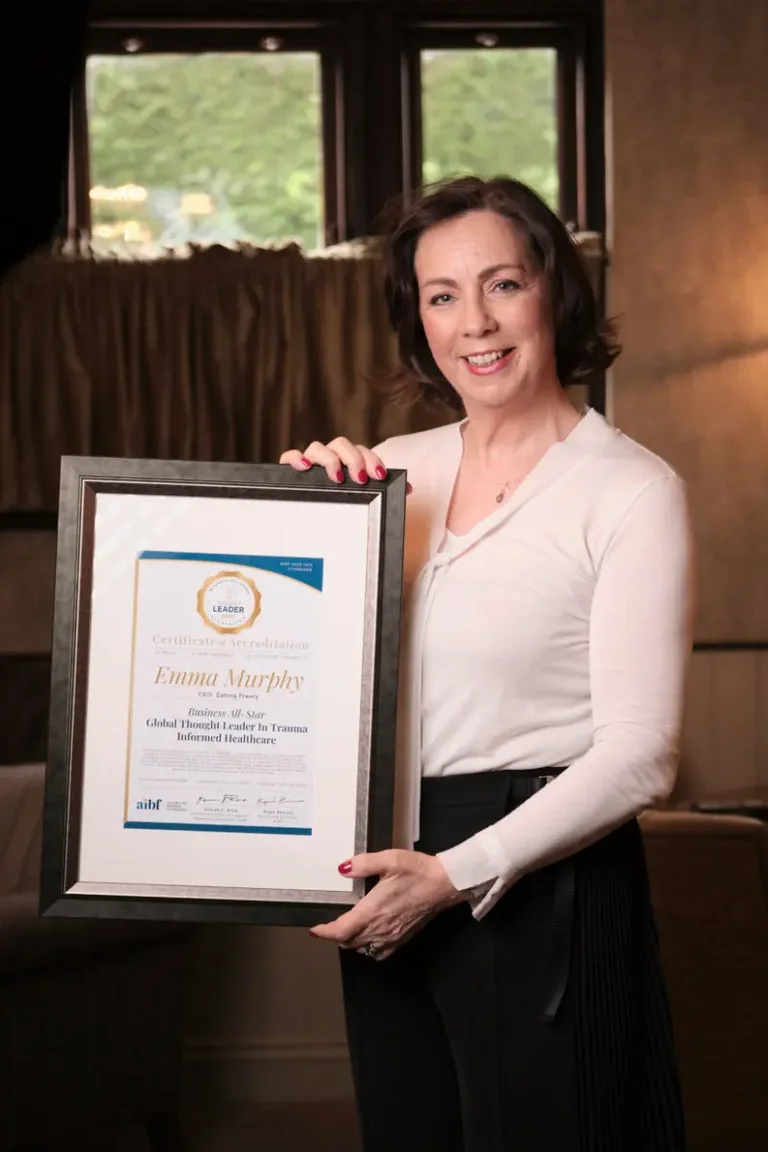
Emma Murphy
Emma Murphy is a psychotherapist, clinical educator, and founder of Eating Freely. She has spent 20 years specialising in emotional eating, binge eating disorder, and the psychological complexity of weight management, and has trained over 400 health professionals as specialists in this area across more than 10 countries.
She advises healthcare providers, digital health companies, and wellbeing organisations on psychological safety within weight management services.
Let's Talk
If you represent a professional association, CE accreditation body, or membership organisation and you'd like to explore a partnership, we'd welcome the conversation.
Book a Call with Emma